Case study //02
Wordcast
A text-to-speech iOS app that lets you listen to any content - articles, documents, emails - read aloud by an AI-generated voice.
//Role
Lead Designer
//Platform
iOS · Web
//Tools
Figma · Claude Code
//Company
44pixels

//01
An internal experiment that became a real product
Wordcast started as an internal experiment - exploring what was possible when you build small, ship fast, and design with intention. I was handed the challenge of figuring out what kind of app it should feel like.
From 0$ to $466K MMR
[in under 3 month]
Wordcast started as an internal experiment at 44pixels - exploring a new way of designing and building with Claude code. The idea was simple:
build something small, ship it, and see what was possible. I was handed
this challenge.
When I started the project, a basic structure already existed. My job was to take that foundation and figure out what kind of app Wordcast should feel like.


[Before]
[After]
//02
The design decision that defined the product
Simplicity because the product's function is genuinely simple - you add content, you listen. Playfulness because simplicity alone isn't enough to be memorable. The two had to work together.
I made a deliberate decision to pull in two directions at once: simplicity
and playfulness.
Simplicity because the product's function is genuinely simple - you add content, you listen. The design shouldn't fight that. Every screen needed to get out of the way and let the content breathe.


Playfulness because simplicity alone isn't enough to be memorable. I wanted Wordcast to feel like a product people enjoy using, not just a utility they tolerate. That meant building a layer of character into the experience - through illustration, animation, and moments of delight throughout the app.

//
Rather than a list of names and accents, each voice became a character - a person with a face, a feel

//03
Getting direct access to the code to close the gap between design and build
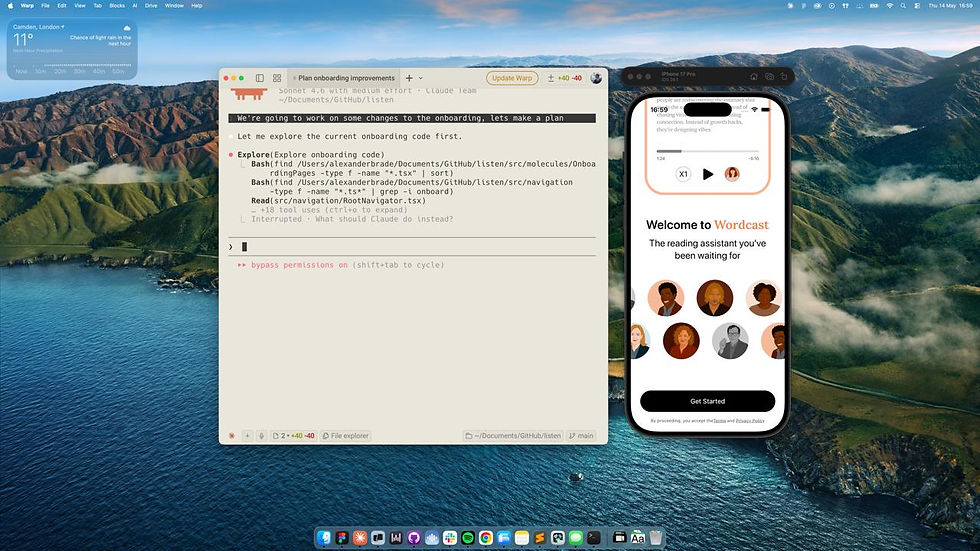
Small details were getting lost between design and build - spacing, animation, transitions. Instead of another round of back-and-forth, I got direct access to the code and made the design behave exactly the way it should.
Wordcast was built during a moment when AI-assisted development was just starting to become a real option for small teams. Adam, our CEO, decided to try building the app himself using Claude Code - and given how simple the core concept was, it was actually feasible.
For a while, the two of us worked in parallel - I designed, he built. But we kept running into the same problem: small details getting lost in translation.
A spacing decision, an animation behaviour, a transition that didn't feel quite right. Every back-and-forth took time and pulled Adam away from the more fundamental parts of the build.
//
So we changed the approach: I got access to the code directly
Instead of handing off specs and waiting, I could go in directly and make the design behave exactly the way it should. Adam could focus on the architecture and his other work. It meant fewer cycles, less friction, and a final product that was much closer to the intended design.
//04
Personalisation as a conversion tool
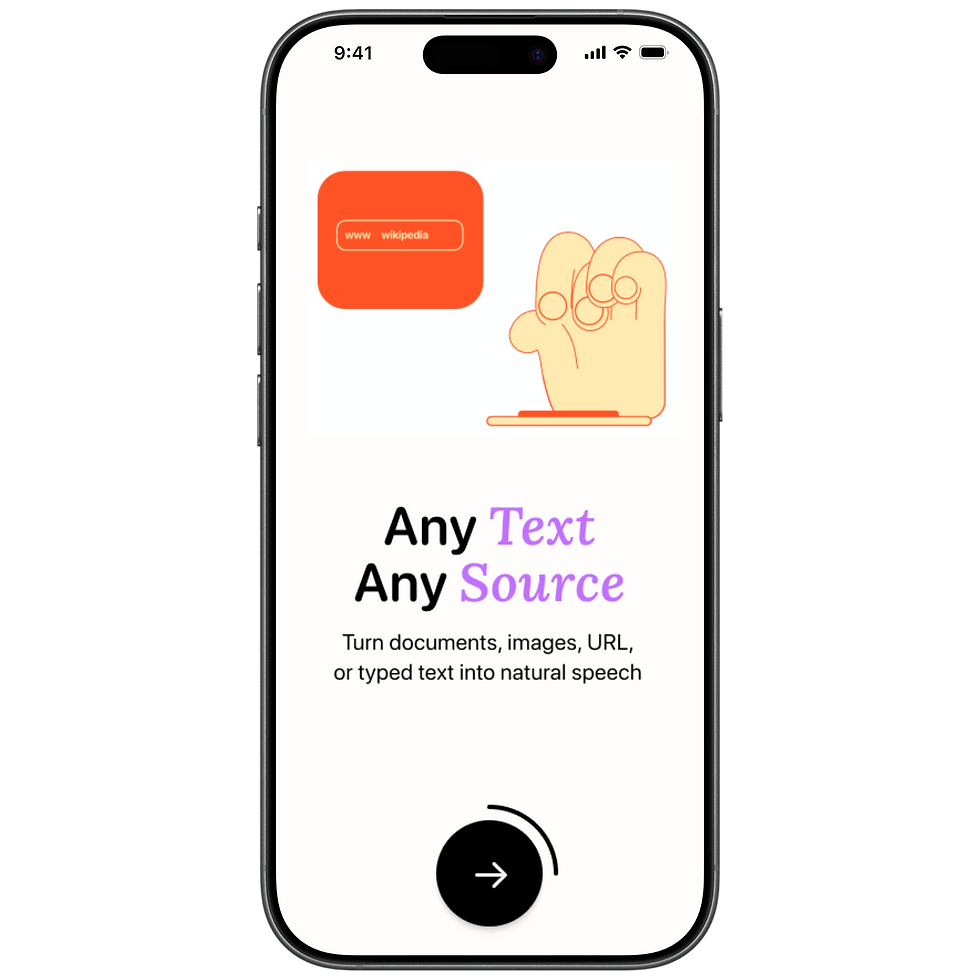
Apps that asked users to invest in the experience before hitting the paywall seemed to convert better. We tested a personalised onboarding flow - and conversion went up 15%.
After launch, we felt we were leaving conversion on the table. I looked at
how other apps handled onboarding and noticed a pattern - the ones converting best made the user feel like the app was built for them beforethe paywall appeared.
The new onboarding opens by asking for your name - then uses it throughout every subsequent screen. By the time you reach the paywall, you've already invested in the experience.
A/B Test
Tested against the original onboarding- Personal version won
5%
Drop in paywall views
15%
Increase in conversion

Onboarding //01
01 →
02 →
03 ·


Onboarding //02
//05
What this project pushed me to become
This project pushed me furthest outside the traditional boundaries of design - into code, data, and product strategy. And that turned out to be the most valuable part.
Before we moved on from Wordcast, I put together a product document mapping out what I'd tackle next - because I was genuinely invested in where the product could go.
But what stayed with me most was a shift in how I was thinking - less about screens, more about behaviour and what it actually takes for a product to earn someone's trust. I coded, analysed data, wrote product strategy. This project pushed me furthest outside the traditional boundaries of design and that turned out to be the most valuable part.
